



Upcoming Seminars/Webinars
Check out these upcoming events at iTHINK Financial.
How to Build Credit Fast in 2026 | iTHINK Financial
By: iTHINK Financial | May 11, 2026
How to Build and Improve Your Credit Score in 2026: A Complete Guide for Florida and Georgia Members
Most people know a credit score is important, but few understand what drives it, how long it takes to build, or what mistakes hurt progress. Building credit, whether starting from zero, recovering from a setback, or aiming for a better score, requires consistent, on-time behavior across a sustained mix of accounts.
For Florida and Georgia members, 2026 brings major changes: the rollout of FICO 10T for mortgages and new scoring models incorporating Buy Now Pay Later data. Understanding these shifts is crucial for everyone.
This guide covers the five scoring factors, the fastest improvement methods, common pitfalls, and how iTHINK Financial's tools support your credit journey.
What is a Credit Score and Why Does It Matter for Loans and Financial Goals?
A credit score is a three-digit number, derived from your credit report, that shows lenders how reliably you manage debt. It dictates loan approval, interest rates, and credit limits.
According to USAGov, having a high credit score can make it easier to get a loan, rent an apartment, and lower your insurance rates. That reach goes further than most people realize. Your credit score isn't just a borrowing tool. It shows up in rental applications, utility deposits, and even some job background checks in certain industries.
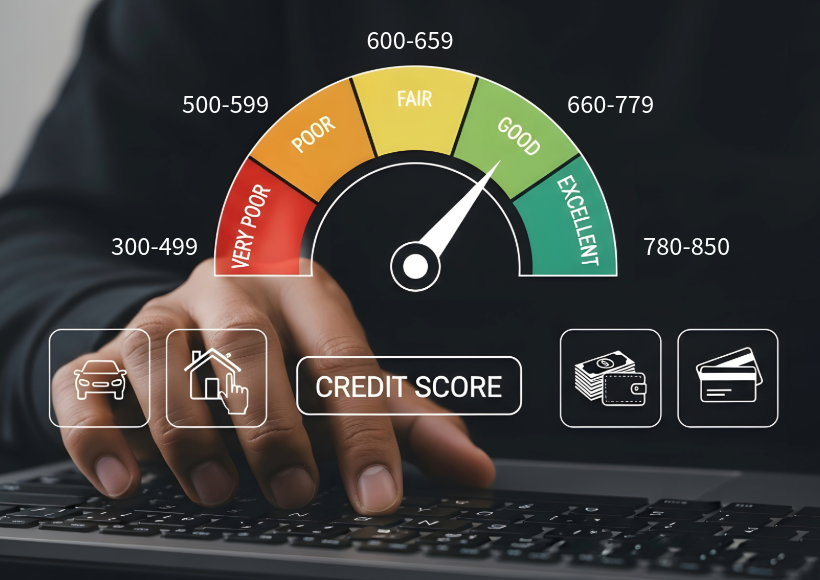
For a score ranging from 300 to 850, a credit score of 700 or above is generally considered good, and a score of 800 or above is considered excellent. Most credit scores fall between 600 and 750, with higher scores reflecting stronger credit decisions and greater lender confidence.
Even small differences in credit scores within this range can significantly impact finances. For instance, a 760 score may secure a much lower mortgage rate than a 680, potentially saving tens of thousands over the loan's life. This demonstrates how credit behavior substantially affects long-term financial outcomes.
What often gets overlooked is that credit scores aren't permanent. They're recalculated regularly based on your current financial behavior, which means the number you have today is not the number you're stuck with. Consistent habits like paying on time, keeping balances manageable, and not opening unnecessary accounts move scores in a positive direction over months and years.
For Florida and Georgia residents pursuing major financial goals, a credit score is often the deciding factor. It impacts the outcome and cost of qualifying for auto loans, mortgages, or personal loans for emergencies.
What Are the 5 Key Factors That Determine Your Credit Score?
Credit scores don't come from a single data point. They're calculated using five distinct factors, each weighted differently based on the scoring model being used. Understanding what goes into the number gives you a clearer picture of which habits matter most and where to focus your energy.
Payment history carries the most weight, typically accounting for around 35% of a FICO score. A single missed payment can leave a mark that takes months to recover from, while a consistent record of on-time payments steadily builds credibility with lenders. According to the CFPB, most credit scoring models consider repayment history the number one factor for building a strong credit score.
Credit utilization is the second major factor, making up roughly 30% of most scores. This measures how much of your available credit you're actively using. NerdWallet notes that people with the highest credit scores often use less than 10% of their available credit, though staying under 30% is the widely accepted baseline. Carrying balances close to your limits can drag your score down significantly even if every payment arrives on time.
Length of credit history accounts for approximately 15% of the calculation. Longer histories give lenders more data to evaluate. This is why closing old accounts, even ones you rarely use, can sometimes backfire. The age of your oldest account, your newest account, and the average age across all accounts all factor into this component.
Credit mix reflects the variety of account types in your file, including credit cards, installment loans, auto loans, and mortgages. It typically makes up around 10% of the score. Lenders generally view borrowers more favorably when they can demonstrate they've managed multiple types of credit responsibly over time.
New credit inquiries round out the remaining 10%. USAGov confirms that applications for new credit accounts are one of the five key components used to calculate your score, and each hard inquiry can cause a small temporary dip that fades within about a year for most scoring models. Applying for several new accounts in a short window can signal financial stress to lenders, even if that's not the case.
Knowing these five factors shifts credit from something abstract into something you can actively manage. The most impactful changes almost always start with payment history and utilization, which together make up nearly two-thirds of your score.
How Do Credit Score Factors Work Together?
Scores are calculated holistically, not in isolation. A borrower with a long history and low utilization can often absorb a new inquiry or a slightly higher balance without much impact. Someone with a thinner file will feel those same changes more sharply. Experian notes that higher scores represent better credit decisions overall and give creditors more confidence that you will repay future debts as agreed. That context matters when you're deciding whether to apply for new credit or pay down existing balances.
How Can You Build Credit from Scratch If You Have No Credit History?
It's frustrating to start with no credit history; lenders need a track record, but you can't build one without getting credit first. The good news is that tools exist for this, and credit unions are often the most accessible source. To qualify for a FICO score, you need at least one account that has been open for six months and has been reported to the credit bureaus during that time. The clock starts when you open your first account, so starting sooner is more important than starting perfectly.
A secured credit card is one of the most common entry points. You make a refundable security deposit that becomes your credit limit, use the card for small purchases, and pay the balance in full each month. The activity gets reported to the credit bureaus just like a traditional card, building your history over time. iTHINK Financial offers the myStart Visa Platinum Credit Card, designed for members establishing or rebuilding their credit profile.
Share secured loans are another strong option for credit union members. With this structure, you borrow against funds already held in your own savings account, so approval is far more accessible than with a traditional unsecured loan. iTHINK Financial's Share Secured Loan starts at just $300, making it a low-barrier way to generate a positive installment loan history on your credit report.
Becoming an authorized user on a family member's credit card account is a third path that many people overlook. If the primary cardholder has a long, clean payment history, that history can be partially reflected in your own credit file. The arrangement requires trust on both sides, but it can significantly accelerate the early stages of credit building.
What all of these approaches share is consistency. Opening an account is step one. Making on-time payments every month without exception is what actually moves the score. According to the CFPB, the more experience your credit report shows with paying loans on time, the more information there is to determine that you are a good borrower. A single missed payment can stay on your report for up to seven years, which is a significant consequence when you're just getting started.
Choosing the right bank is crucial when starting out. Credit unions prioritize member benefits over shareholder returns, often leading to more flexible approval for credit-builder products and personalized guidance. Membership with iTHINK Financial takes about 10 minutes online and grants members in Florida and Georgia access to available credit-building tools, including Credit Score powered by SavvyMoney®. This program is a free service that helps iTHINK members understand their credit score by providing access to their full credit report, financial tips and education, credit offers based on their score, a credit score simulator, credit monitoring alerts, and more.
What Are the Fastest Ways to Improve Your Credit Score in 2026?
Improving a credit score takes time, but some strategies move the needle faster than others. The key is identifying which factors in your profile are currently doing the most damage and addressing those first, rather than applying generic advice across the board.
Paying down credit card balances is consistently the highest-impact move for most people. Because credit utilization updates when your card issuer reports your new balance to the bureaus, typically at the end of each billing cycle, a significant paydown can show up in your score within 30 to 60 days.
Disputing errors on your credit report is another fast-acting strategy that gets overlooked. Mistakes are more common than most people expect, including payments marked late that were made on time, accounts that don't belong to you, or negative items that should have aged off the report. According to the CFPB, a credit reporting company must generally investigate a dispute within 30 days of receiving it, meaning a successful correction can improve your score within a single billing cycle. Free weekly credit reports are available from all three major bureaus at AnnualCreditReport.com.
Credit Score powered by SavvyMoney® is available to our members through iTHINK Financial Online Banking or our Mobile Banking app. It is a free service to help our members understand their credit score by giving them access to their full credit report. Additionally, members will have access to financial tips and education, credit offers based on their score, a credit score simulator, credit monitoring alerts, and more.
Log in to iTHINK Financial Online Banking or our Mobile Banking App. Activate your Credit Score by selecting the Credit Score widget in the dashboard and agreeing to the terms of agreement.
A credit limit increase can lower your utilization ratio without paying down debt, especially if your income has risen or your payment history is clean. However, keep spending steadily so the higher limit improves your ratio, not your debt.
Automating at least the minimum payment prevents accidental late payments, a major credit score issue. iTHINK Financial's tools, such as account alerts and online bill pay, simplify payment scheduling. Small improvements in payment history—the most important factor—significantly boost scores over time.
How Long Does It Take to See Credit Score Improvements?
How long it takes to improve your credit score depends heavily on what's holding your score back. Utilization issues can be resolved in weeks once balances drop. Errors on your report can be cleared within 30 days after a successful dispute, according to the CFPB. Late payment history takes longer, typically improving gradually as the negative item ages and new positive history accumulates. Understanding which category applies to your situation helps you set realistic expectations and prioritize the right moves first.
How Are FICO 10T and Buy Now Pay Later Changing Credit Scoring in 2026?
Two key 2026 shifts in credit scoring are affecting borrowers nationwide, including iTHINK Financial members in Florida and Georgia. Both changes emphasize one core factor for creditworthiness: consistent, on-time repayment.
The first change involves FICO 10T, the latest version of the scoring model now being rolled out across mortgage lending following a Federal Housing Finance Agency directive. What sets FICO 10T apart from older models is the inclusion of trended data. Rather than taking a single snapshot of your credit utilization, FICO 10T examines 24 months of credit activity, allowing lenders to see whether your balances are trending up or down over time. A borrower who has been steadily paying down debt looks meaningfully different from one who carries the same balance month after month, even if both have identical scores under older models.
This is good news for those improving their finances, as consistent debt paydown is now rewarded. Conversely, it raises the stakes for borrowers with creeping balances, as this trend is now visible to lenders rather than hidden behind a static snapshot.
The second major development involves Buy Now, Pay Later loans. FICO announced the launch of FICO Score 10 BNPL and FICO Score 10 T BNPL in June 2025, making them the first credit scores from a leading provider to incorporate BNPL data. Previously, BNPL purchases through platforms like Affirm and Klarna were largely invisible to credit bureaus, creating what some analysts called "phantom debt" that lenders couldn't see when evaluating borrowing capacity.
That is changing as adoption of the new models grows. FICO conducted a yearlong study using Affirm data and found that incorporating BNPL data had an effect of within 10 points up or down for more than 85% of consumers in the study, according to NPR. For responsible BNPL users who pay on time, the change can actually be a positive, generating credit history from purchases that previously went unrecorded. For those with missed BNPL payments, the exposure cuts the other way.
The practical takeaway for members in 2026 is straightforward. On-time payments across every account, including BNPL loans, carry more weight than ever. Balances that trend downward are rewarded. And credit behavior that was once invisible is increasingly part of the picture lenders see.
What Credit Building Mistakes Should You Avoid That Hurt Your Score?
Building credit takes patience, but certain mistakes can erase months of progress almost overnight. Most of them stem from misunderstandings about how scoring models actually work, not from careless behavior.
Missing a payment is the most damaging single mistake you can make. Payment history carries more weight than any other factor, and a late payment can stay on your credit report for up to seven years, even if you catch up quickly afterward. The impact diminishes over time as positive history accumulates, but the mark remains. Setting up automatic payments for at least the minimum due on every account eliminates this risk entirely.
Closing old accounts is a mistake that catches many people off guard. It feels like financial housekeeping, but closing a card you no longer use reduces your total available credit, which raises your utilization ratio and shortens your average account age. If you need to close accounts, close newer ones first, since older accounts contribute more to your credit history length, which makes up 15% of your score.
Applying for multiple credit accounts in a short window creates a cluster of hard inquiries that signals financial stress to lenders. Each inquiry can lower your score by a few points, and multiple inquiries in a short period can have a compounding effect. The exception is rate shopping for a single loan type, such as a mortgage or auto loan, where multiple inquiries within a 14- to 45-day window are typically counted as one.
Ignoring your credit report is another costly oversight. A 2024 Consumer Reports investigation found that 44% of participants spotted at least one error after pulling their credit report. Errors like incorrectly reported late payments or accounts that don't belong to you can suppress your score without you realizing it. Free weekly reports are available from all three bureaus at AnnualCreditReport.com.
High balances reported to credit bureaus at statement close, even if paid in full monthly, temporarily hurt your score. To fix this, pay down balances before the statement closing date.
How Long Does It Take to Recover From a Serious Credit Mistake?
A serious delinquency, such as a collection account or default, can stay on your report for up to seven years from the original date of delinquency, according to Experian. Recovery is possible, but it requires consistent positive behavior over an extended period. The best approach is prevention: automate payments, monitor balances, and check your report regularly so small problems don't become long-term ones.
How Long Does It Actually Take to Build Good Credit from Zero?
How quickly you see credit results varies based on your starting point and consistency. However, reliable benchmarks exist.
As iTHINK Financial notes, you must have a credit account open for at least 6 months before credit agencies begin tracking your credit history. This is why opening a secured card or a secured loan early matters. The clock does not start until there is activity to report.
From there, the path to a good score follows a fairly predictable arc. Climbing from fair credit into the good range of 670 and above can often require 12 to 18 months of sustained responsible credit behavior, according to recent credit industry analysis. That timeline assumes you are keeping utilization low, not opening too many accounts at once, and avoiding any missed payments along the way. For people who start strong and stay consistent, hitting the "good" range within a year is realistic.
Achieving excellent credit (760+) takes time, as credit history length is 15% of the score. Accounts must age, underscoring the importance of opening and maintaining the right accounts early.
The timeline for improvement varies. Minor issues, such as high utilization, can be fixed in a few months. More serious marks, such as collections, take longer, though their impact lessens as positive history grows.
For iTHINK Financial members in Florida and Georgia, credit-building tools like the myStart Visa and Share Secured Loan generate reported activity, but consistent payments are key to score improvement.
What Is a Realistic Credit Score Goal for Year One?
For someone starting from zero, reaching a score in the 670 to 700 range within 12 months is achievable with on-time payments, low utilization, and no new derogatory marks. That range qualifies as "good" with most lenders and opens the door to better loan rates, card approvals, and rental applications. Pushing beyond 700 into the very good and excellent ranges takes additional time, but the habits that get you to 700 are the same ones that eventually get you to 760 and beyond.
How Can iTHINK Financial Help You Build Credit in Florida and Georgia?
Building credit depends heavily on your financial institution. For members in Florida and Georgia, iTHINK Financial is structured to support credit building at every stage with accessible tools, guidance, and goal-serving products.
For members starting from zero, the myStart Visa provides a straightforward entry point. Tied to a refundable security deposit, it functions like a standard credit card for bureau reporting purposes while keeping risk low for members who are establishing their profile for the first time. Used responsibly with on-time payments and low balances, it generates the kind of consistent payment history that moves scores in the right direction over time.
The Share Secured Loan offers a second path for members who want to add an installment loan to their credit mix. Starting at just $300, it uses funds already held in a savings account as collateral, making approval accessible regardless of existing credit history. Because installment loans and revolving credit are weighted differently in scoring models, having both types on your report strengthens the credit mix factor that makes up 10% of your score.
For members further along in their credit journey, iTHINK Financial's broader product lineup supports the next set of financial goals. Personal Term Loans from $300 to $25,000 provide flexible borrowing at competitive fixed rates with no application fees and no prepayment penalties. Auto loans, home equity lines of credit, first mortgages, and the Visa Platinum card with no annual fee give members the tools to build a diversified credit profile over time.
Join iTHINK Financial online to access digital banking tools like mobile alerts, online bill pay, and eAlerts, which promote timely payments and credit score improvement.
Credit building is a process that rewards consistency and patience. Having the right products, accessible support, and a financial institution that operates in your interest rather than around shareholder priorities makes that process meaningfully easier. Explore iTHINK Financial's credit-building options and apply for membership today at ithinkfi.org.
Frequently Asked Questions About Building and Improving Your Credit Score
What is the difference between a credit score and a credit report?
A credit report is the detailed record of your credit history, including every account you have opened, your payment history, current balances, and any derogatory marks like collections or late payments. A credit score is the three-digit number calculated from that report using a scoring model. Your report is the raw data; your score is the summary lenders see first. You can access free weekly credit reports from all three major bureaus at AnnualCreditReport.com, and monitoring both regularly helps you catch errors before they do lasting damage.
Do credit unions offer better credit-building options than traditional banks?
Credit unions operate as member-owned, not-for-profit institutions, which often translates into more accessible credit-building products and more flexible approval criteria than you would find at a large commercial bank. Products like share-secured loans and secured credit cards are common at credit unions and are specifically designed for members with limited or no credit history. iTHINK Financial offers both the myStart Visa and Share Secured Loan, starting at $300, giving members in Florida and Georgia practical tools to generate reported credit activity without taking on excessive financial risk.
How much will my credit score drop if I miss one payment?
The impact of a single missed payment depends on your starting score and overall credit profile, but it can be significant. A single late payment can potentially cause a score to drop anywhere from 60 to 110 points, depending on where you are starting from. The higher your score, the more a missed payment hurts, because lenders view it as an unexpected deviation from an otherwise strong pattern. Setting up automatic payments for at least the minimum due on every account is the most reliable way to prevent this entirely.
How does credit utilization affect my score, and how quickly can I fix it?
Credit utilization measures how much of your available revolving credit you are currently using. Keeping it below 30% is the widely accepted baseline, though people with the highest scores typically stay below 10%, according to NerdWallet. The good news is that utilization is one of the fastest factors to improve. Because most card issuers report your balance to the bureaus at statement close, paying down a balance before that date can reflect in your score within a single billing cycle, often within 30 days. Unlike late payments, high utilization leaves no lasting mark once the balance is paid down.
Can Buy Now Pay Later loans hurt my credit score in 2026?
Yes, depending on which scoring model a lender uses. FICO launched new scoring models in 2025 that incorporate Buy Now Pay Later data for the first time, meaning missed BNPL payments can now negatively affect your score just like a late credit card payment. For members using BNPL services through platforms like Affirm or Klarna, setting up autopay or payment reminders follows the same logic as managing any other credit account. Responsible use of BNPL can actually help build a positive history, while missed payments carry real consequences under the newer models, according to NPR.
Not a Member? Join us today!
It's easy to join! Apply for your lifetime Membership with iTHINK Financial in about 10 minutes.